Fasteners on Exposed-Fastener Roofs
Understanding the fasteners on an exposed-fastener metal roof helps a Glen Oaks Commons homeowner. Here is what to know.
What They Are
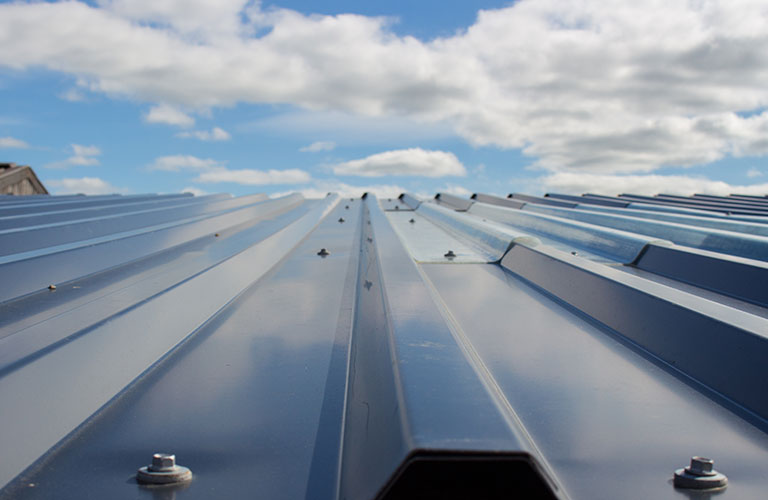
Exposed-fastener roofs use screws driven through the panel face to hold the panels to the roof, with the screw heads visible on the surface. The screws hold the panels. They go through the face. Their heads are visible. They secure the roof. They are the fasteners.
The Sealing Washers
Each fastener has a washer, often with a rubber or similar gasket, that seals around the screw to keep water from entering at that point. The washer seals the screw. It keeps water out. It is part of the fastener. It does the sealing. It is important.
A Sealing Point
Each fastener is a sealing point on the roof, since the screw penetrates the panel and the washer seals that penetration, so the fasteners matter for water-tightness. Fasteners are sealing points. They penetrate the panel. The washers seal them. They affect water-tightness. They matter.
Distinct From Concealed Systems
Exposed-fastener systems differ from standing seam, which uses concealed fasteners, so the exposed fasteners are a feature specific to these roofs that needs occasional attention. They differ from standing seam. The fasteners are exposed. They are specific to these roofs. They need attention. It is a system feature.
The Fasteners, in Short
Exposed-fastener roofs use screws driven through the panel face to hold the panels, each with a washer that seals around the screw to keep water out, so each fastener is a sealing point that matters for water-tightness, a feature specific to these roofs that needs occasional attention.
One point worth making clear for Glen Oaks Commons homeowners is that exposed-fastener metal roofs, which are a common and economical type of metal roofing, have a particular maintenance consideration that homeowners should understand, the fasteners themselves. On these roofs, the panels are held in place by screws that are driven through the face of the panels, with the screw heads visible on the surface, which is what gives this type of roof its name. Crucially, each of these screws has a washer, typically with a rubber or similar gasket, that seals around the screw to keep water from entering at that penetration point. This means that every fastener is, in effect, a small sealing point on the roof, and because there can be many of them, they collectively matter a great deal to the roof's water-tightness. The thing to understand is that, over time, these fasteners can develop issues. Temperature changes cause the metal to expand and contract, and over the years this repeated movement can work fasteners loose or affect their hold. The sealing washers can wear or degrade from weathering and sun exposure, reducing their seal. And fasteners can back out, with screws gradually loosening or rising from the panel. None of this is a sign that anything is wrong with the roof in a fundamental sense, rather, it is a normal maintenance consideration that comes with an exposed-fastener system, because the fasteners are wear points that may need attention over the roof's life. This is actually one of the differences between exposed-fastener roofs and standing seam, which uses concealed fasteners hidden in the seams and so does not have exposed screws to maintain in the same way.
It also helps Glen Oaks Commons homeowners to know both how to spot fastener issues on an exposed-fastener roof and how those issues are addressed, because catching and fixing them keeps the roof watertight. The signs to watch for are fairly straightforward. Loose or raised screws, ones that sit up from the panel rather than flush against it, indicate fasteners that have loosened. Screws that have backed out, risen partly or fully from the panel, are a clearer sign still, because they no longer hold or seal properly. Worn, cracked, or damaged washers indicate that the seal at those fasteners may be compromised. And a leak or signs of water near a fastener point directly to a fastener seal issue, since the fastener is a sealing point where a failure lets water in. As for fixing them, the approach depends on the fastener's condition. A fastener that has loosened but is otherwise still sound can sometimes simply be re-tightened, restoring its hold and seal. A fastener that has actually failed, one that is stripped, has backed out, or has a worn-out washer, is replaced, and often this is done with a slightly larger fastener that can hold securely in the existing hole, which also renews the sealing washer so the new fastener seals properly. On an older roof where many fasteners are showing their age, it can make sense to address them across the whole roof, sometimes replacing fasteners throughout, to restore the overall seal. This kind of work is best done by a professional who can assess the fasteners and carry out the repairs properly, and incorporating periodic fastener attention into the care of an exposed-fastener roof helps catch issues before they let water in, keeping the roof sound and watertight over its life.
One point worth making clear for Glen Oaks Commons homeowners is that exposed-fastener metal roofs, which are a common and economical type of metal roofing, have a particular maintenance consideration that homeowners should understand, the fasteners themselves. On these roofs, the panels are held in place by screws that are driven through the face of the panels, with the screw heads visible on the surface, which is what gives this type of roof its name. Crucially, each of these screws has a washer, typically with a rubber or similar gasket, that seals around the screw to keep water from entering at that penetration point. This means that every fastener is, in effect, a small sealing point on the roof, and because there can be many of them, they collectively matter a great deal to the roof's water-tightness. The thing to understand is that, over time, these fasteners can develop issues. Temperature changes cause the metal to expand and contract, and over the years this repeated movement can work fasteners loose or affect their hold. The sealing washers can wear or degrade from weathering and sun exposure, reducing their seal. And fasteners can back out, with screws gradually loosening or rising from the panel. None of this is a sign that anything is wrong with the roof in a fundamental sense, rather, it is a normal maintenance consideration that comes with an exposed-fastener system, because the fasteners are wear points that may need attention over the roof's life. This is actually one of the differences between exposed-fastener roofs and standing seam, which uses concealed fasteners hidden in the seams and so does not have exposed screws to maintain in the same way.
Get Your Fasteners Checked
Glen Oaks Commons Metal Roofing inspects and repairs metal roof fasteners across Glen Oaks Commons and Johnson County. Call (765) 676-3491 for a free inspection of the fasteners on your exposed-fastener metal roof.